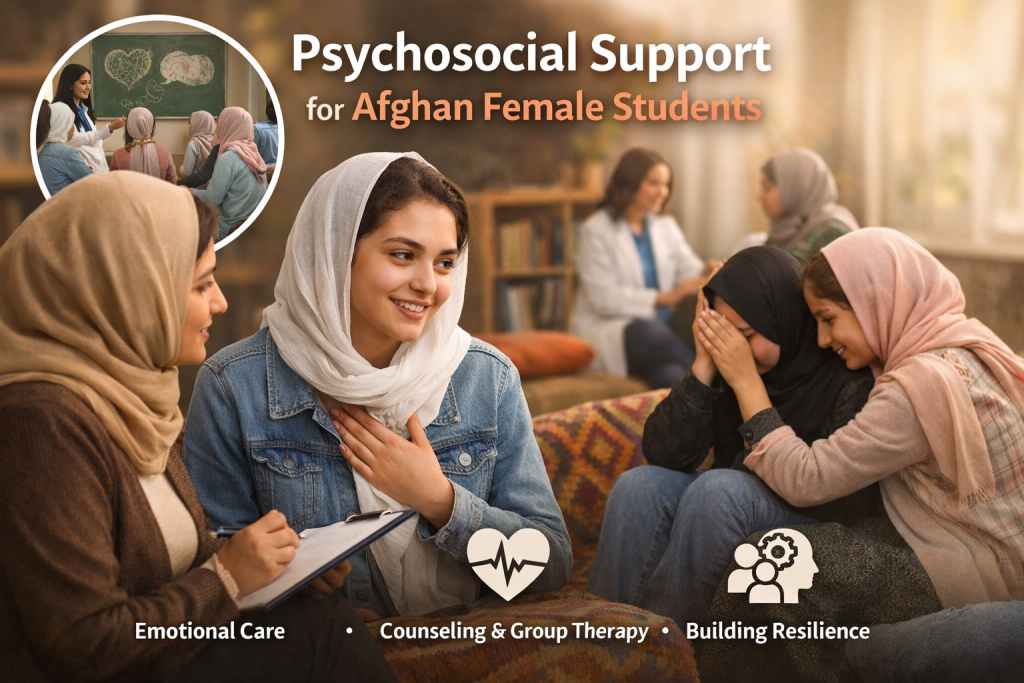
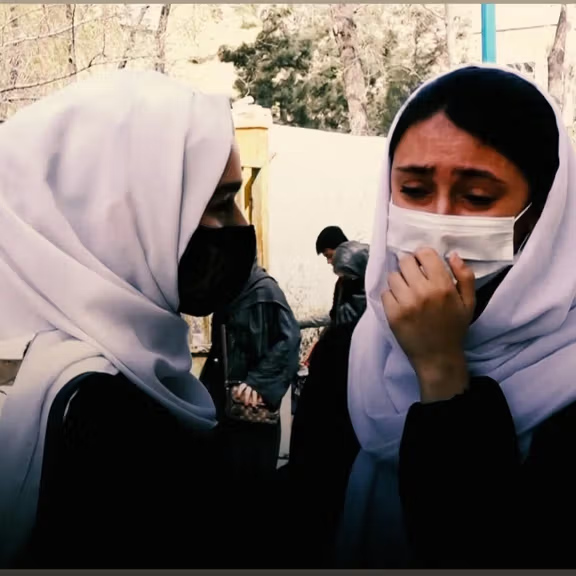
The OGEC Psychosocial Support Program is a dedicated wellbeing initiative designed to protect and support the mental, emotional, and social health of Afghan girls and women enrolled in OGEC’s educational programs. Prolonged school closures, forced isolation, conflict, displacement, and uncertainty have placed Afghan female students at significant psychosocial risk. This program exists to ensure that learning remains safe, supportive, and sustainable.
The program provides structured, confidential, and culturally sensitive psychosocial support, delivered by qualified mental health professionals and trained support staff. It works in close coordination with OGEC’s academic and mentorship programs to ensure that students are supported not only intellectually, but also emotionally.
Core Objectives
Program Structure
Individual psychosocial support sessions (confidential and voluntary)
Group wellbeing sessions and psychoeducation workshops
Crisis identification and referral pathways
Collaboration with mentors, academic teams, and administration
Clear safeguarding, confidentiality, and consent protocols
Safeguarding and Ethics
The OGEC Psychosocial Support Program operates under strict safeguarding policies, ethical guidelines, and confidentiality standards consistent with Canadian nonprofit and international humanitarian best practices. Student participation is always voluntary, informed, and respectful of cultural and personal boundaries.
Who the Program Serves
- Students in the OGEC School for Girls (Grades 7–12)
- University students in KOMU-E (Kabul Online Medical University in Exile)
- Participants in the Kankoor Preparation Project
Afghan female doctors and graduates in the Postgraduate Licensing Program
Education cannot thrive without wellbeing. The OGEC Psychosocial Support Program ensures that Afghan girls and women are not left to navigate trauma and stress alone—providing them with stability, dignity, and hope alongside access to education.
Supporting minds, protecting wellbeing, and sustaining learning in times of crisis.